

If your shoulder or upper back feels tight after pickleball, especially after overhead shots, serves, or fast hand exchanges, you’re not alone. Pickleball shoulder pain is more common than most players realize, especially with repeated overhead movements. Repetitive overhead movements place high demands on the shoulder, and research in overhead athletes shows that mobility limitations, strength imbalances, and movement inefficiencies throughout the shoulder and kinetic chain can increase the risk of injury. [1] (Cools et al., BJSM).
This is one of the main reasons pickleball shoulder pain tends to build up over time rather than appear suddenly.
The good news: with the right mobility reset, you can restore smooth overhead motion, reduce unnecessary strain, and recover more effectively between sessions.
👉 Keep reading, a quick mobility reset can make a noticeable difference in how your shoulder feels after your next game.
Why Shoulder & Upper-Back Tightness Happens
Pickleball involves repeated overhead movements, quick reactions, and sustained postures. Over time, this can lead to:
- Upper-back stiffness (thoracic spine)
- Shoulder fatigue and reduced mobility
- Neck tension from compensation
Research shows that the thoracic spine plays a key role in shoulder movement. Changes in upper-back posture can alter shoulder range of motion, muscle force, and scapular mechanics, which may affect how the shoulder moves and feels. (Kebaetse et al., Physiotherapy Journal).
That’s when you may start noticing:
- Reduced power on overhead shots
- Slower reaction time
- Increased tightness or irritation
If you’re dealing with pickleball shoulder pain, improving mobility and movement patterns is key to long-term relief.
The Goal: Restore Smooth Overhead Motion
Instead of just stretching the shoulder, an effective approach focuses on:
- Improving thoracic mobility
- Restoring scapular (shoulder blade) control
- Reducing excess tension in the neck and upper traps
Research on shoulder rehabilitation [3] emphasizes a structured approach that combines mobility, muscle balance, and neuromuscular control to restore proper movement and support shoulder function. (JOSPT)
Your Pickleball Mobility Reset Routine
☺️Stay with me. I’ll show you a simple routine you can start using right after you play.
Do this routine after playing or on recovery days (about 8–12 minutes).
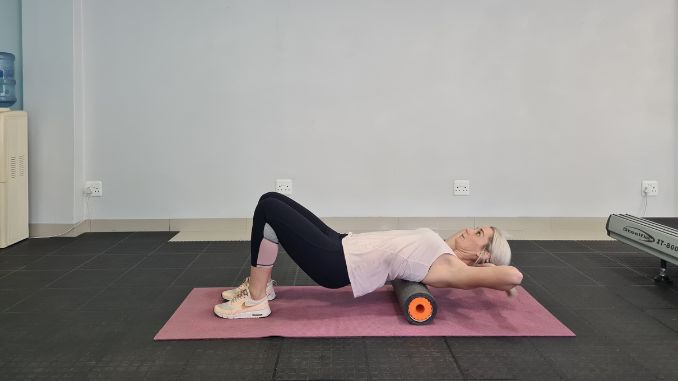
1. Thoracic Extension Over Foam Roller
Focus: Upper-back mobility
- Lie on your back with your knees bent and feet flat on the floor.
- Place a foam roller across your upper back
- Clasp your hands behind your head for support.
- Gently lean back over the roller, aiming to stretch the mid-back area.
- Hold for 10-20 seconds, and 5-10 repetitions.
Foam rolling has been shown to improve range of motion without negatively impacting performance. [4] (Wiewelhove et al., Sports Medicine).
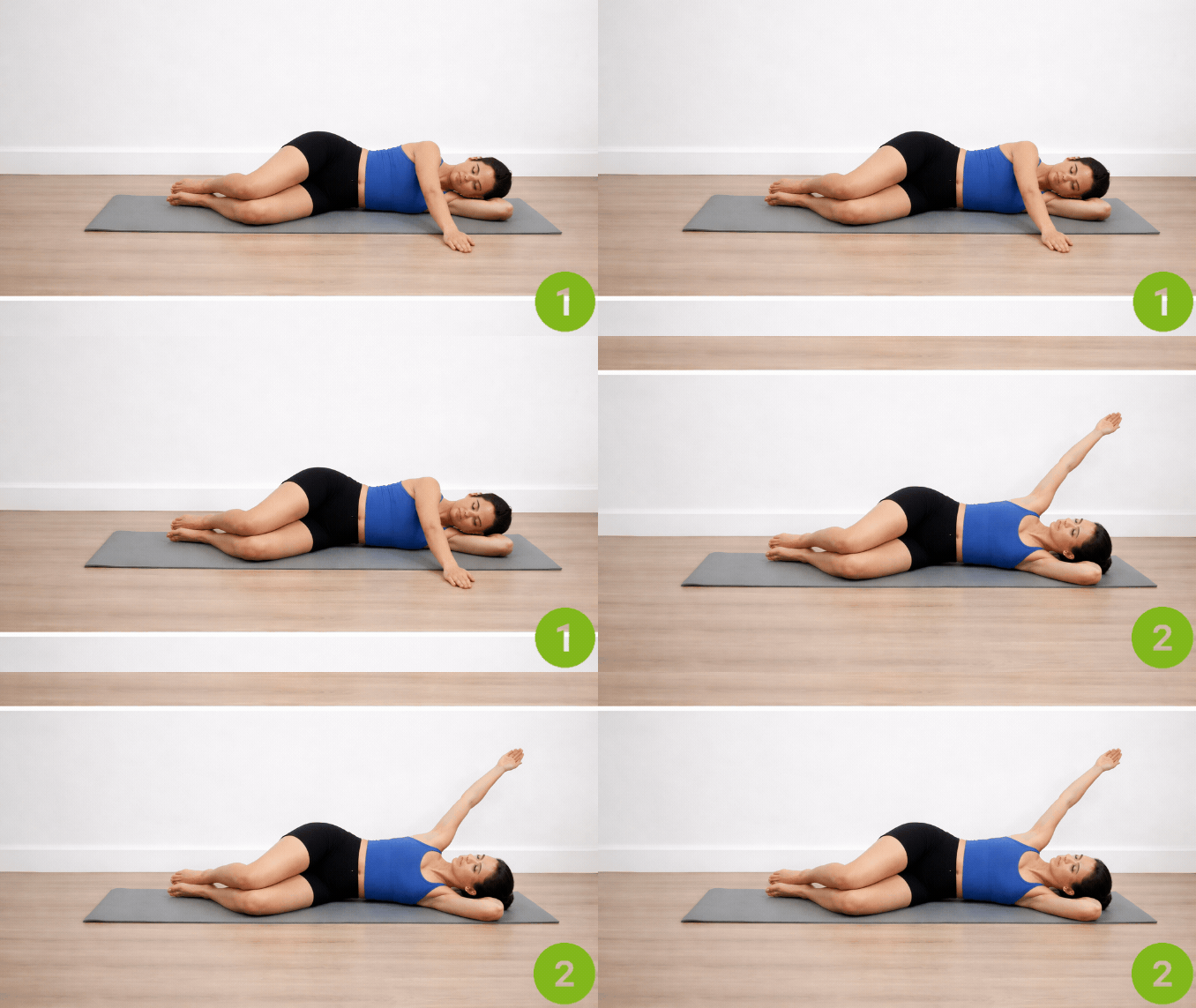
2. Open Books (Thoracic Rotation)
Focus: Rotation + reducing stiffness
- Lie on your side with your knees bent. Place your bottom arm under your head and your top arm straight out in front of you.
- Slowly lift your top arm and rotate it across your body, opening your chest.
- Follow your hand with your eyes, and try to bring your top shoulder and arm toward the floor behind you.
- Perform 6–8 reps per side.
Improving thoracic mobility [2] can help support normal shoulder movement by allowing better scapular mechanics and range of motion. (Kebaetse et al., Physiotherapy Journal)
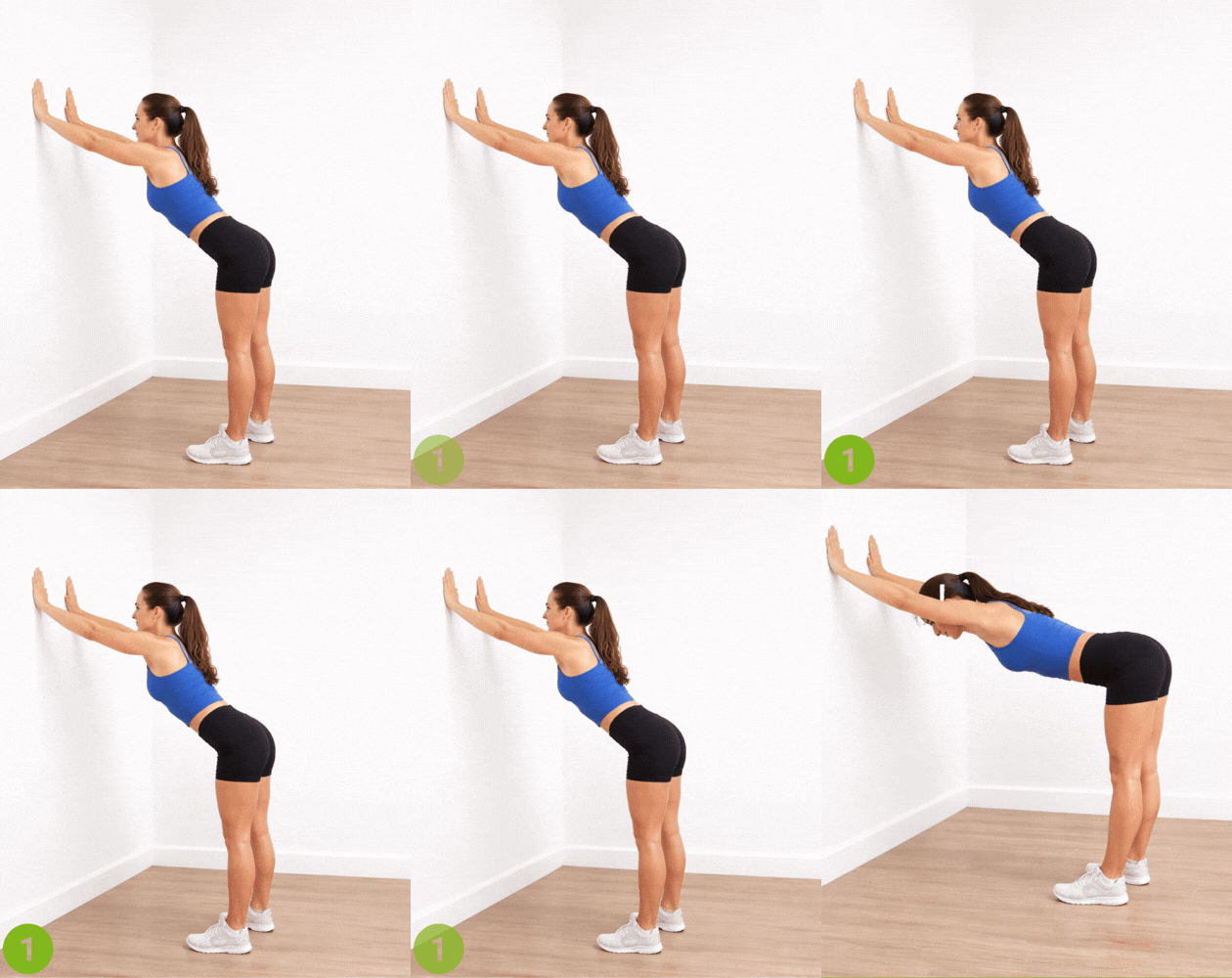
3. Wall Shoulder Flexion Stretch
Focus: Overhead range
- Place your hands on a wall
- Step back, hinge at your hips, and slowly drop your chest towards the floor
- Keep arms straight, and spine neutral
- Aim to get your torso parallel to the floor
- Hold for 20-30 seconds, and 3 repetitions
Research in overhead athletes suggests that shoulder mobility may play a role in injury risk, highlighting the importance of maintaining adequate range of motion. (Cools et al., BJSM).
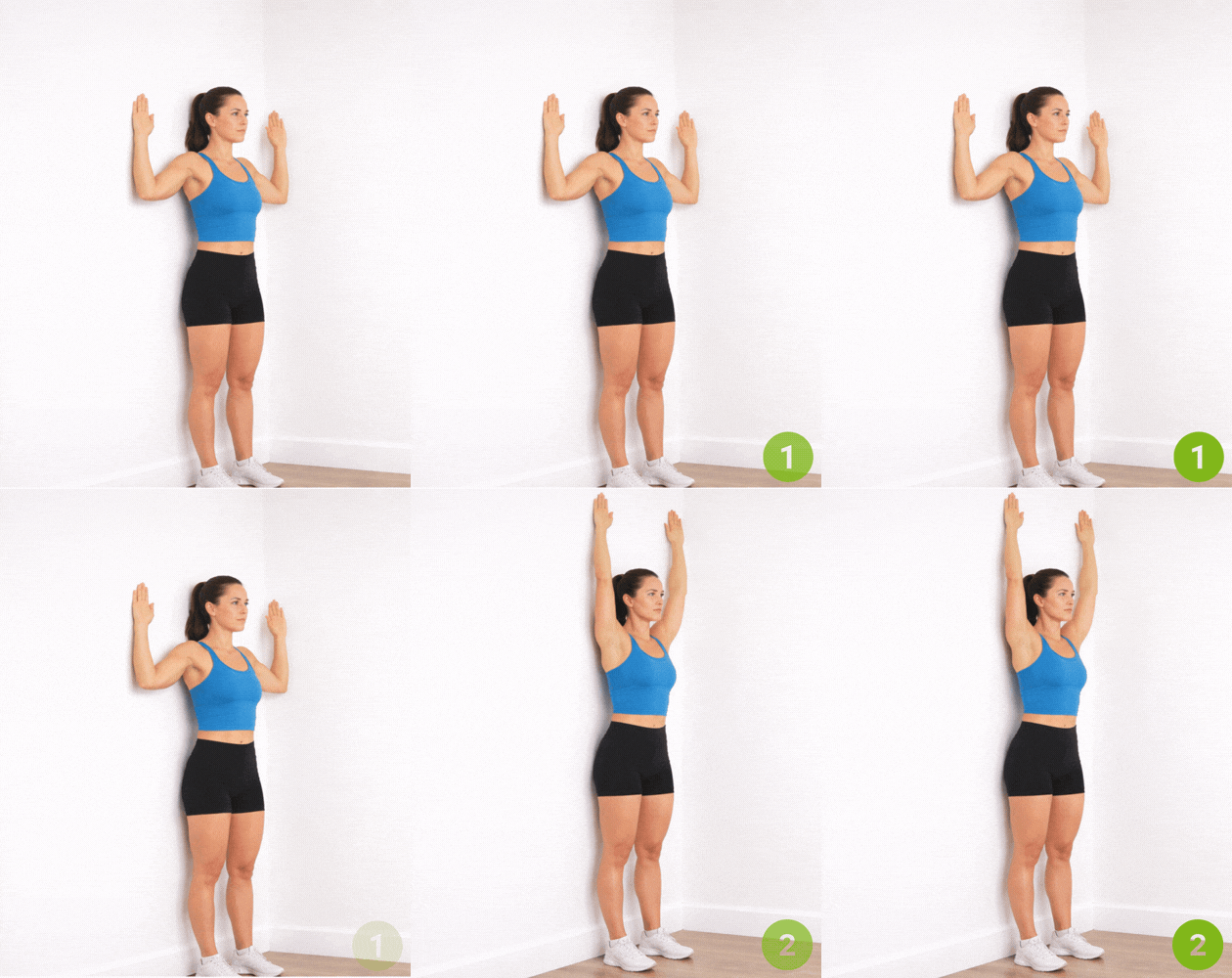
4. Scapular Control (Wall Slides)
Focus: Shoulder stability
- Stand with your back against a wall, raise your arms into a ‘goalpost’ position (90° elbow bend) and rest them lightly against the wall.
- Slide arms upward with control
- Keep movement smooth, ensure that your arms are in contact with the wall and you’re not arching your back.
- 8–10 reps
Research on scapular mechanics shows that proper shoulder blade movement plays a key role in normal shoulder function. (Scapular Dyskinesis Reviews).[5]
5. Neck Reset (Chin Tucks)

Focus: Reduce neck tension
- Gently tuck your chin
- Hold for 3–5 seconds
- Repeat 8–10 times
Neck tightness often develops as a compensation when the shoulder and upper back are not moving well, increasing the muscular workload [6] in surrounding areas.
When to Do This Routine
- After playing pickleball
- On recovery days
- Before playing (light version) if you feel stiff
While these techniques are often used regularly in practice, current research mainly supports their short-term effects on range of motion, with less clarity on long-term outcomes. (Wiewelhove et al.).
What You Should Notice
⭐ There’s also a helpful resource waiting for you at the end if you want to keep this simple.
With consistent use, many players begin to notice:
- Easier overhead movement
- Less shoulder fatigue
- Reduced upper-back stiffness
- Better recovery between sessions
Want a Done-For-You Routine?
If you want a simple follow-along version of this routine, we’ve created one for you:
Final Thoughts
Shoulder and upper-back tightness don’t necessarily mean something is “wrong”. It can reflect how your body is responding to repeated overhead demands.
The good news is that most cases of pickleball shoulder pain can improve with the right combination of mobility, strength, and recovery.
Research suggests that factors such as mobility, posture, and biomechanics can influence movement and shoulder function, although evidence for their role in injury prevention and long-term performance remains limited. (Kebaetse et al., Physiotherapy Journal) or (JOSPT)
A short, consistent mobility reset may help you:
FAQs
1. Why does my shoulder feel tight after pickleball?
Repeated overhead shots, serves, and fast hand exchanges can place extra demand on the shoulder and upper back, leading to tightness and fatigue
2. Can upper-back stiffness affect my shoulder movement?
Yes. Limited upper-back mobility can affect how your shoulder moves, especially during overhead motions.
3. When should I do this mobility reset?
You can do it after playing, on recovery days, or as a light pre-game reset if you feel stiff.
4. How long does the routine take?
The routine is designed to take about 8 to 12 minutes.
5. What benefits might I notice with consistent use?
Many players notice easier overhead movement, less shoulder fatigue, reduced upper-back stiffness, and better recovery between sessions.