
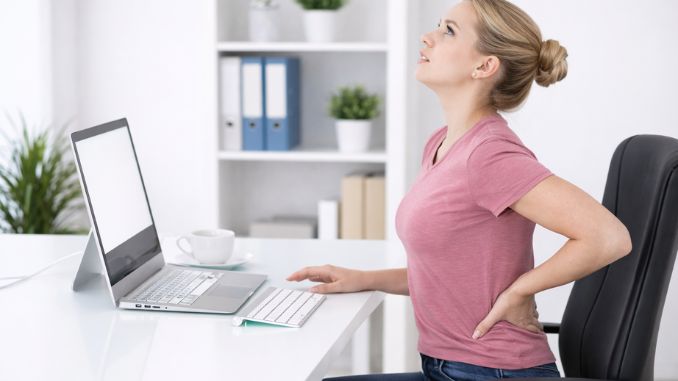
Most of us sit for hours every day—at work, in the car, or on the couch. This constant sitting tightens the hip flexors, a group of muscles (including the psoas and iliacus) that connect your spine and pelvis to your thighs.. When these muscles shorten, your hips feel stiff, your posture suffers, and lower back pain can appear.
Prolonged sitting can limit movement, reduce circulation, and drain your energy. The good news? You can fix it. With just a few minutes of daily stretching, you can restore flexibility, improve posture, and relieve discomfort. Here are 5 simple stretches to unlock your hips and feel better fast.
Why Hip Flexors Get So Tight
- Prolonged Sitting: Hours spent sitting keep your hip flexors in a shortened position. Over time, they become stiff and weak, making it harder to stand or move freely.
Kimberly Baptiste-Mbadiwe, PT (HSS Orthopedic Physical Therapy Center, New York, U.S.) says:
“If you sit at a desk all day … I recommend changing position every 30 to 45 minutes — or even sooner if needed — to avoid tightness. Stand up, walk around, or perform a quick stretch, if necessary.” - Repetitive Movement: Activities like running, cycling, or climbing stairs repeatedly contract the hip flexors. Without proper stretching, this leads to restricted mobility and stiffness.
- Muscle Compensation: When major muscles like the glutes are weak or inactive, the hip flexors take over to stabilize movement. This constant overuse causes chronic tension, poor posture, and even lower back pain. Tight hip flexors [1] can limit how far your leg moves backward (hip extension) and may contribute to low back pain or mobility problems.
Benefits of Hip Flexor Stretches for Hip Mobility
- Improves Flexibility: Regular stretching lengthens tight muscles, allowing the hips to move freely and comfortably.
- Enhances Posture: Loosening the hip flexors helps realign the pelvis, reducing slouching and improving overall posture.
- Reduces Pain: Stretching relieves tension that often causes lower back, hip, and knee discomfort.
- Boosts Performance: Better hip mobility supports smoother, stronger movements in walking, running, and exercise.
- Prevents Injury: Flexible hips reduce strain on surrounding muscles and joints, keeping your body balanced and resilient.
Stretch Routine: Simple Moves to Release Tight Hips
Stretching and mobility exercises [2]– to lengthen shortened muscles and improve hip extension. Strengthening opposing muscles– such as glutes and hamstrings, to correct imbalance.
Kneeling Hip Flexor Stretch
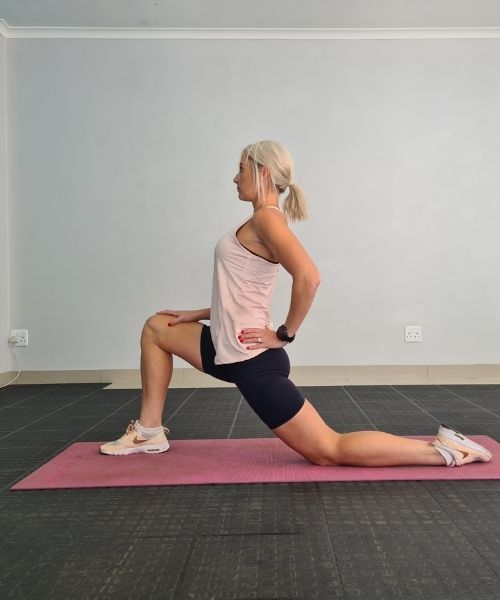
Begin in a half-kneeling position on the floor with one knee bent in front of you and the other knee resting on the ground behind you. Maintain good alignment with your head, shoulders, and hips. Engage your core and gently shift your weight forward until you feel a light stretch at the front of your hip and thigh on the back leg. Keep your torso upright and avoid arching your lower back. Hold this position for several deep belly breaths, in through your nose and out through your mouth. Return to the starting position and repeat the movement on the opposite side. Hold each stretch for 20–30 seconds and repeat 2–3 times per side
Pigeon Pose
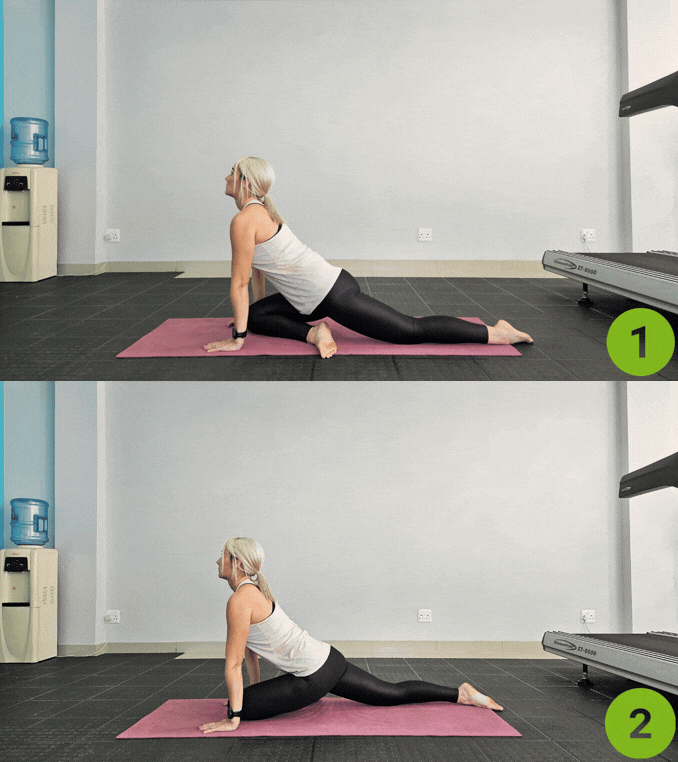
Begin in a plank position with your hands beneath your shoulders and your toes tucked under. Bring your right knee forward and place it behind your right wrist while extending your left leg straight back, keeping your hips square. Engage your core and gently lower your torso toward the floor until you feel a stretch in your hips and glutes. Hold this position for several deep belly breaths, in through your nose and out through your mouth. Relax and return to the starting position. Repeat the movement on the opposite side. Hold each stretch for 20–30 seconds and repeat 2–3 times per side.
Supine Hip Flexor Stretch
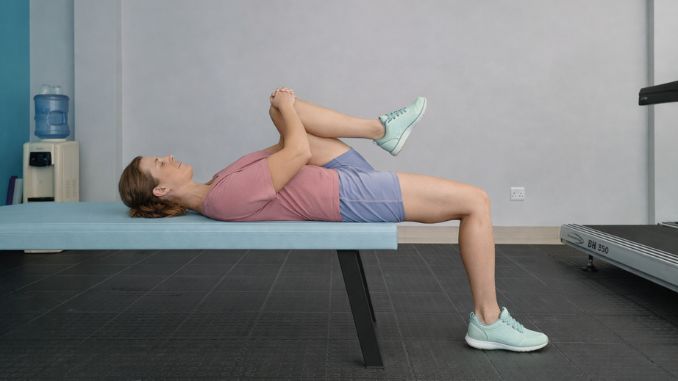
Lie on your back near the edge of a bench, bed, or elevated surface with your legs extended. Engage your core. Pull one knee gently toward your chest while allowing the other leg to hang off the edge of the surface. You’ll typically feel a gentle stretch in the front of the hip and thigh of the hanging leg. Hold this position for several deep belly breaths, in through your nose and out through your mouth. Return to the starting position and repeat the movement on the opposite leg. Hold each stretch for 20–30 seconds and repeat 2–3 times per side
Standing Quad and Hip Flexor Stretch
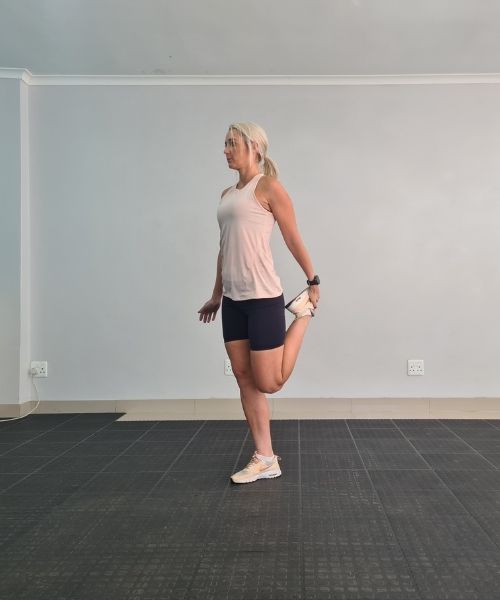
Begin in an upright standing position with your feet hip-width apart, maintaining good alignment with your head, shoulders, and hips. Engage your core and bend one knee, bringing your heel toward your glutes. Grasp your ankle or foot with the same-side hand and gently pull it closer to your body until you feel a stretch at the front of your thigh and hip. Keep your knees close together and avoid leaning forward. Hold this position for several deep belly breaths, in through your nose and out through your mouth. Return to the starting position and repeat the movement on the opposite side. Hold each stretch for 20–30 seconds and repeat 2–3 times per side.
Seated Figure 4 Stretch
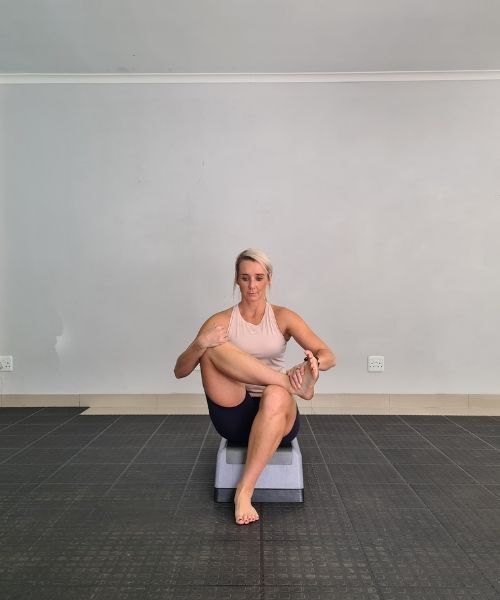
Begin in an upright sitting position on a chair or mat, maintaining good alignment with your head, shoulders, and hips. Engage your core and cross one ankle over the opposite knee, forming a figure “4” shape with your legs. Gently press down on the lifted knee or lean forward slightly to deepen the stretch in your hips and glutes. Hold this position for several deep belly breaths, in through your nose and out through your mouth. Relax and repeat the movement on the opposite side. Hold each stretch for 20–30 seconds and repeat 2–3 times per side.
Main Hip Flexor Muscles and Their Functions
The hip flexors are key muscles at the front of your hips that help lift your legs, stabilize your pelvis, and support smooth movement. The four main hip flexors are:
- Psoas Major
Connects the spine to the femur and is the primary muscle for hip flexion.
The psoas muscle [3] assists in stabilizing the spine and maintaining upright posture. But when it’s too tight, it places excessive tension on the lumbar spine, like pulling on a rope that’s too short. This added compression can irritate spinal structures and increase pain. Loosening the muscle reduces this pressure and can make your spine feel more supported and stable. (3) - Iliacus
Works with the psoas major to form the iliopsoas, aiding in hip flexion and pelvic stability. A tight iliacus can limit leg movement and cause hip stiffness. - Rectus Femoris
Part of the quadriceps, this muscle assists in hip flexion and knee extension, essential for walking, running, and climbing. Tightness can affect stride length and knee mobility. - Sartorius
The longest muscle in the body, it assists with hip flexion, abduction, external rotation, and knee flexion. Tightness can reduce hip rotation and flexibility.
Why It’s Important: Tight hip flexors can cause pain, poor posture, and limited mobility. Regular stretching and strengthening keep your hips flexible, strong, and functional.
Conclusion
Tight hip flexors can affect how you move, stand, and feel, often leading to stiffness, poor posture, and back pain. The good news is that with regular stretching and strengthening exercises, you can restore flexibility and improve overall mobility.
A few minutes of focused movement each day can make a big difference, helping you feel stronger, move more freely, and maintain a healthy, active lifestyle.
FAQs
1. How do you release tight hip flexors?
You can release tight hip flexors with gentle exercises that stretch and strengthen the muscles around the hip joint. Movements that extend the hips, like lunges or dynamic stretches, help relieve tightness and improve flexibility. A simple approach is to keep your left knee bent in front of you and your right leg extended behind you to gently open the front of your hips. This helps reduce hip flexor pain and improve mobility over time.
2. Are hip flexor stretches safe during pregnancy?
Yes, gentle hip flexor exercisesare generally safe during pregnancy, but they should be done with caution and only after consulting a healthcare provider. Focus on slow, controlled movements that support the hip jointwithout putting too much strain on the body. Keeping your left footand right legstable while stretching is a safe way to relieve tightnesswithout overdoing it.
3. How can I tell if my hip flexors are tight?
You may have tight hip flexors if you feel hip flexor pain, stiffness when standing up, or difficulty extending your right leg behind you. Limited movement in the hip joint, tension when pulling your left knee toward your chest, or tightness during daily activities are also common signs. These symptoms mean your hip muscles are shortened and could benefit from regular stretching.
4. How should I sleep to loosen my hip flexors?
Sleeping posture can affect your hip flexibility. To relieve tightness, try lying on your back with a pillow under your knees to keep the hip joint neutral. If you sleep on your side, place a pillow between your knees so your left knee doesn’t rest directly on your right leg, which can strain the hips. Avoid curling into a tight fetal position, as this shortens the hip flexors and can worsen tightness over time, as this can make the hip muscles tighter over time.