You played a great session today.
Long rallies. Sharp shots. You squeezed in a few extra games because the energy was there and nobody wanted to leave.
You felt great on the court—like an athlete. Then, you woke up the next morning, and your body was reminding you of the Pickleball injury prevention routine you missed.`
Then you woke up the next morning.
Both calves are screaming. Your hips feel like they’ve been filled with concrete overnight. Getting out of bed becomes a negotiation. The walk to the bathroom is slow and deliberate, and somewhere between the mattress and the coffee maker your body sends you a memo you didn’t ask for: “You are not 25 anymore.”
Sound familiar?
👉 Stick with me until the end. I’ll walk you through a simple way to start easing this tightness so you can feel better on and off the court.
If you’re playing pickleball [1] two or three times a week and you’re somewhere between 45 and 70, this is probably the most honest description of your Monday morning you’ve read in a while.
And here’s the thing: it doesn’t mean you’re broken. It doesn’t mean you’re playing too much. It doesn’t mean you need to slow down.
It usually means one thing: your muscles played hard, and they didn’t get what they needed afterward.
Why Pickleball Hits Harder Than It Looks
Pickleball has a bit of a reputation problem. From the outside, it looks like a gentle sport a smaller court, a lighter paddle, a wiffle ball. How hard can it be?
Ask your calves. They know What the body actually does during a pickleball session is a different story. Every game involves:
• Explosive lateral cuts that load the knees and the outer thigh.
• Sudden stops from a sprint that hammer the Achilles and lower calf.
• Deep lunges for low balls that tax the hips and IT band.
• Hundreds of repeated paddle swings that quietly burn out the shoulder and forearm.
• Rapid direction changes at the net that demand constant micro-adjustments from your ankles, knees, and hips.
These aren’t gentle movements. And when you play multiple games back-to-back, which every recreational player does, because why stop when you’re having fun, those tissues absorb more load than they’re used to absorbing.
The result shows up later that evening, or first thing the next morning, when the adrenaline is long gone, and the body is presenting its invoice.
Pickleball injury prevention isn’t about stopping, but about maintaining your body so it can handle the demands of the sport.
Post-game soreness after pickleball isn’t random. It’s the predictable outcome of high-demand movement on muscles and joints that weren’t given the chance to wind down properly after working hard.
Why the Soreness Gets Worse When You Play More Often
Here’s the cycle most recreational pickleball players get stuck in:
Play hard → feel sore → rest a few days → feel better → play hard again → soreness comes back.
Every week. Like clockwork.
The problem usually isn’t the sport itself. It’s what happens, or more precisely, what doesn’t happen in the hours after you finish playing.
When muscles stay tight after a session, especially the calves and the outer hip complex, that tension doesn’t just stay in those muscles. It changes how the knees and lower back move. It affects your balance. It makes you hesitate on shots you used to go for without thinking.
Over time, players in this cycle start to notice things they’d rather not admit:
• They’re stiff for the first fifteen minutes of every game, waiting for the body to “loosen up.”
• Their lateral movement feels slower than it used to.
• They’re more cautious going for wide balls, not because they can’t make the shot, but because they’re not sure the body will cooperate.
• They’ve quietly started popping ibuprofen before games to stay comfortable.
None of this has to be the story. Smart recovery done consistently, in just a few minutes after every session, breaks this cycle and prevents long-term injuries, contributing to overall Pickleball injury prevention.
👉 Keep reading because in the next section, I’ll show you exactly what to do after you play to reduce soreness and recover faster.
The 7-Minute Post-Pickleball Recovery Routine
One of the most effective recovery tools recreational players have access to is also one of the most misunderstood: the foam roller.
Done right, foam rolling for muscle soreness helps muscles release tension, encourages blood flow to tissues that have been working hard, and restores length and mobility to areas that pickleball stresses most, helping with Pickleball injury prevention.
Done wrong, which is how most people do it, it’s uncomfortable, ineffective, and easy to give up on.
The right approach after pickleball can help your body:
✔ Release the calf tightness that turns into the next-morning shuffle.
✔ Loosen the hip and glute tension that eventually becomes lower back stiffness.
✔ Reduce the kind of next-day soreness that makes you dread the stairs.
✔ Recover faster between sessions, so you show up to your next game feeling ready, not still recovering from the last one.
The best part? It takes about 7 minutes. You can do it on your living room floor while you’re still in your court shoes.
The 4 Areas Pickleball Players Should Focus On
1. Calves
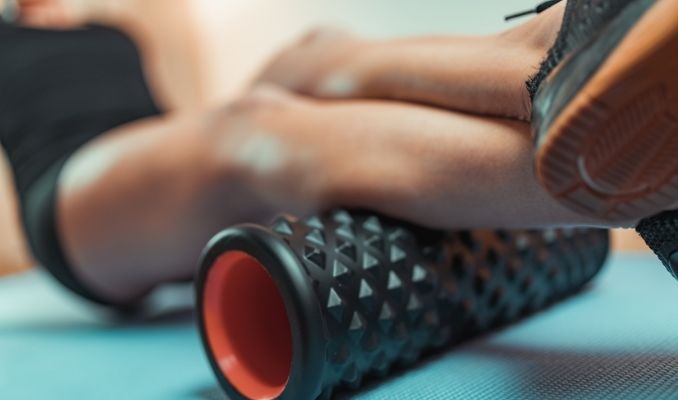
Your calves are probably the loudest complaint after a long session, and for good reason. They absorb every stop, every sprint, every direction change. Rolling the calves slowly, 30 to 45 seconds per side with moderate pressure and a pause on any tight spots, is the single highest-return thing most players can do in the first five minutes after they leave the court.
2. Glutes
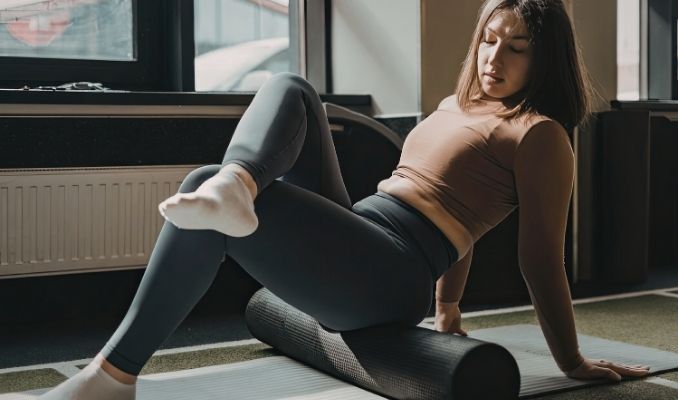
The glutes are the engine behind every lunge, turn, and powerful shot. They also take on extra load when the hips are tight, which, for most recreational players with desk jobs, is most of the time. Rolling in this area releases tension that, if left alone, quietly builds into lower back stiffness by the end of the week.
3. Hips
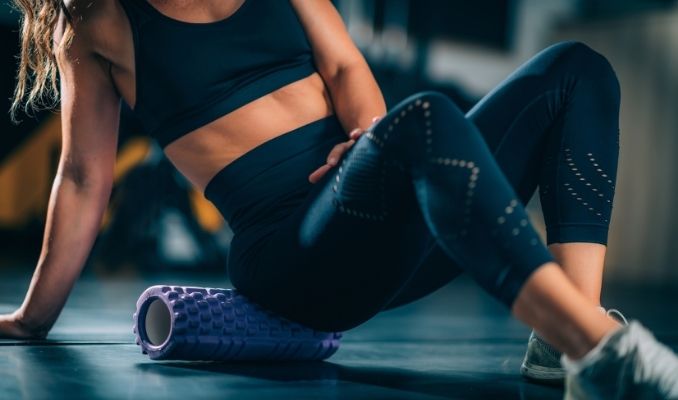
Tight hips are one of the most common reasons players feel stiff and restricted on court, and one of the least talked-about. The hip flexors and lateral rotators get hammered by pickleball’s constant lateral demands. A few minutes of targeted rolling here doesn’t just help recovery; it directly protects the knees and lower back in your next session.
4. IT Band Area (Outer Thigh)
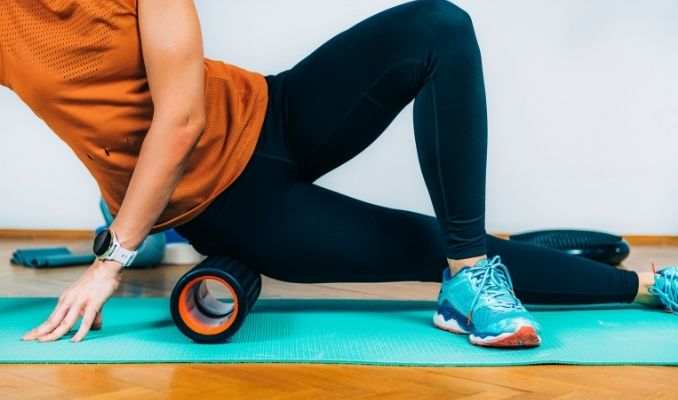
The outer thigh is the sneaky one. Players rarely feel it during the game, but by the next morning or after a long week of multiple sessions, the IT band tightness can create a pulling sensation around the knee that feels alarming. Rolling the outer thigh muscles that sit alongside the IT band can significantly reduce that tension and keep the knee tracking properly during lateral movement.
Why This Works And Why Most Players Skip It
Here’s the truth about post-game recovery: the window right after you play is when it matters most.
That’s also the window when most people grab their bag, head to the car, and collapse on the couch.
Totally understandable. You just played three games. You’re tired. You deserve the couch.
But here’s what happens in the body when you skip recovery: the muscles that were working hard cool down in a contracted, tight state. The metabolic byproducts of exercise accumulate in the tissue rather than being flushed out. Inflammation that would have been manageable with a short routine starts compounding.
By morning, that tight state has had eight hours to set in. That’s the concrete-calf feeling. That’s the stiff-hip shuffle.
Players who add even a short foam rolling routine [2] after every session consistently report moving with more ease and confidence, especially in the first game of the day, making foam rolling a key element of Pickleball injury prevention.:
• Feeling noticeably looser later that evening
• Waking up with significantly less soreness the next morning
• Recovering faster between sessions and getting back on the court sooner
• Moving with more ease and confidence, especially in the first game of the day
👉 You’re almost there. This next part ties everything together so you can start feeling the difference after your very next game.
The Bottom Line
If your body is sore after pickleball, especially that next-morning soreness that’s become so familiar it almost feels normal your body is not telling you to stop playing. It’s not telling you that you’re too old.
It’s telling you that it worked hard and it needs help recovering.
The goal isn’t to play pickleball today and survive it. The goal is to play pickleball today, next week, next season, and in ten years. That starts with what you do in the seven minutes after the last point.
Want the Full 7-Minute Routine?
To make recovery as simple as possible, we put together a free Pickleball Foam Rolling Guide — a step-by-step video routine and a printable checklist built specifically for the areas pickleball stresses most.
By following the 7-minute routine, you’ll not only recover faster, but you’ll also improve your overall Pickleball injury prevention by keeping muscles flexible and prepared for your next game. Inside the guide, you’ll get:
✔ The full 7-minute foam rolling routine, designed specifically for recreational pickleball players
✔ A step-by-step checklist you can pull up on your phone right after a game
✔ A short video demonstration so you can see exactly how each movement should look and feel
It’s free. It’s fast. And it was built for the body of someone who plays the sport they love and wants to keep playing it.
Frequently Asked Questions
Use it after your next game and see what a difference seven focused minutes can make before you wake up tomorrow morning.
1. Why do I feel so sore the day AFTER playing, not during?
During your game, adrenaline and endorphins are working hard. Your body is focused on the task and its built-in pain management is active. It’s in the hours after that everything cools down and the inflammatory response kicks in that the accumulated load makes itself known. The good news is that proper post-game recovery directly targets this window.
2. Is next-morning soreness a sign that something is actually wrong?
Mild to moderate soreness after activity is normal, especially if you played multiple games or you’re ramping up how often you play. It’s your body adapting. What isn’t normal and what deserves professional attention is sharp pain, swelling, pain that’s localized to a joint, or soreness that doesn’t meaningfully improve within 48 to 72 hours.
3. How soon should I foam roll after playing?
Ideally, within 20 to 30 minutes of finishing your last game, while the muscles are still warm and the tissue is most receptive. If that’s not possible, doing it later that same evening is still significantly better than not doing it at all.
Ready to Play Pain-Free? Follow our 7-minute post-pickleball recovery routine to reduce soreness and stay in the game longer.
→ Claim your free Pickleball Foam Rolling Guide here