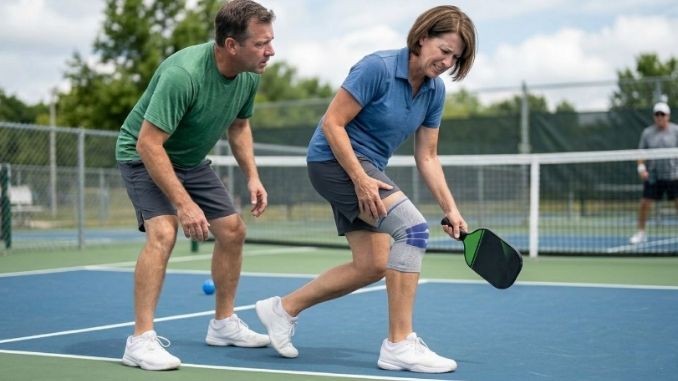
If you deal with pickleball knee pain after long matches or tournaments, it is easy to assume your knee is the problem.
But in many cases, the knee is only where the stress shows up.
The real issue may come from the joints above and below it: your hips and ankles.
When ankle mobility is limited and hip movement is restricted, the knee may absorb more load during movement during lunges, pivots, and quick directional changes. Over time, this may contribute to knee soreness, irritation, or recurring discomfort after play.
The good news is that improving hip and ankle mobility can help take pressure off your knees and support better movement on the court.
👉 Stick with me until the end — I’ll walk you through a simple way to take pressure off your knees so you can move more comfortably on the court.
Why Does Pickleball Knee Pain Happen
Pickleball puts repeated mechanical stress on your lower body. Every serve return, wide shot, and quick stop asks your knees to bend, stabilize, and help absorb force.
That is not always a problem on its own.
The issue starts when the joints that help control knee movement are not doing their job well.
Two of the biggest contributors are:
- limited ankle dorsiflexion
- tight hips and glutes
If either area lacks mobility, knee tracking can change, and stress can build up faster, especially during tournaments or back-to-back games.
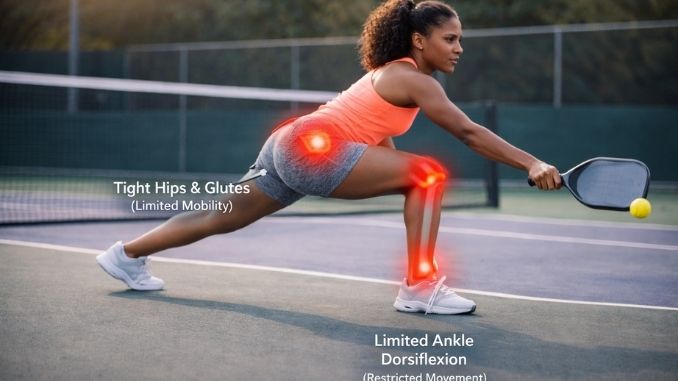
Limited Ankle Mobility Can Increase Knee Stress
Your ankle needs to bend forward as you squat, lunge, and move into low positions on the court. This motion is called dorsiflexion.
If you have limited ankle dorsiflexion:
- Your heel may lift too early.
- Your knee may move inward more than ideal.
- This can alter load distribution and increase stress on the knee joint.
Research shows that limited ankle dorsiflexion is associated with altered knee mechanics and greater knee valgus during movement (Bell et al.; Rabin et al.).
That is one reason many players notice knee pain after pickleball, even when the knee itself is not the root cause.
Tight Hips and Glutes Can Affect Knee Tracking
Your hips help control how your leg moves when you push off, decelerate, and change direction.
When your hips and glutes are tight or underactive:
- Your knee can cave inward during movement
- Your stride can become less efficient
- Your quadriceps may compensate more to stabilize the knee
Poor hip control has been linked to abnormal lower-extremity mechanics that can affect knee alignment during movement (Powers; Willy and Davis).
This combination often leads to extra knee irritation, especially if you are already playing through fatigue.
Why Tournament Play Makes Knee Pain Worse
Many players only notice a problem after several matches. That makes sense.
As fatigue builds, movement quality can decline. If ankles are stiff and hips are tight, compensations may become more noticeable and increase stress at the knee.
Restrictions at one joint can influence movement at neighboring joints and contribute to compensations during dynamic tasks (Macrum et al.; Monnier et al.).
This is why knee soreness after tournaments is so common. The problem is not always one bad movement. It is often the result of repeated compensation.
How to Take Pressure Off Your Knees
👉 Quick note — before you move on, don’t skip the final section, because that’s where most players realize what’s actually been missing in their routine.
If you want to reduce pickleball knee pain, do not focus only on the knee.
You also want to improve the joints that influence it most:
- Restore ankle mobility.
- Loosen tight hips.
- Wake up the glutes.
- Support better knee alignment.
A short mobility routine can help you move better and reduce unnecessary stress on the knee.
Simple Ankle and Hip Mobility Routine for Pickleball Players
1. Ankle Rock for Dorsiflexion
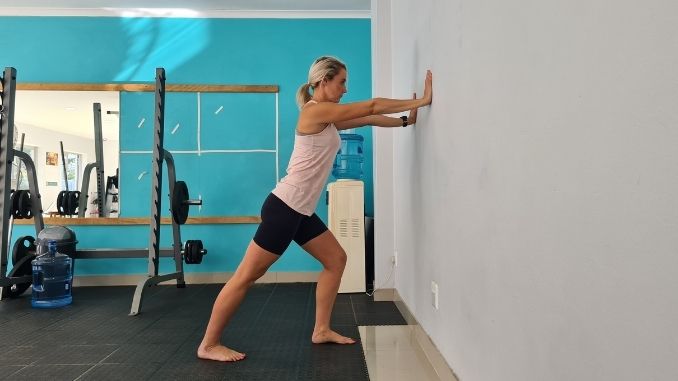
- Stand facing a wall with one foot forward. Keep your heel down and gently drive your knee toward the wall.
- Do 10 to 15 reps per side.
- This can help improve ankle mobility and reduce extra stress on the knee.
2. Half-Kneeling Hip Flexor Stretch
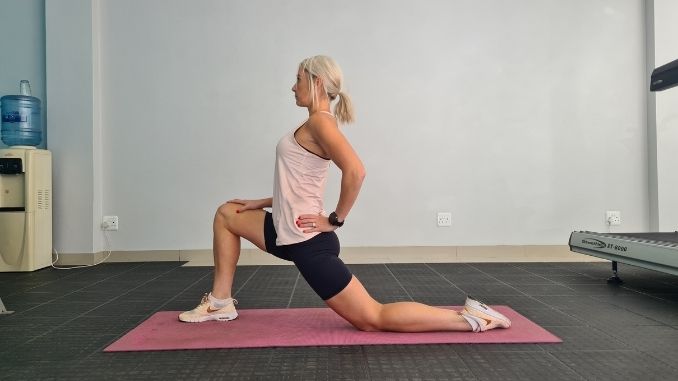
- Step into a half-kneeling lunge position. Gently tuck your pelvis and shift forward until you feel a stretch at the front of the hip.
- Hold for 20 to 30 seconds per side.
- This can improve hip extension and help reduce compensation through the knee.
3. Glute Activation Squat Hold
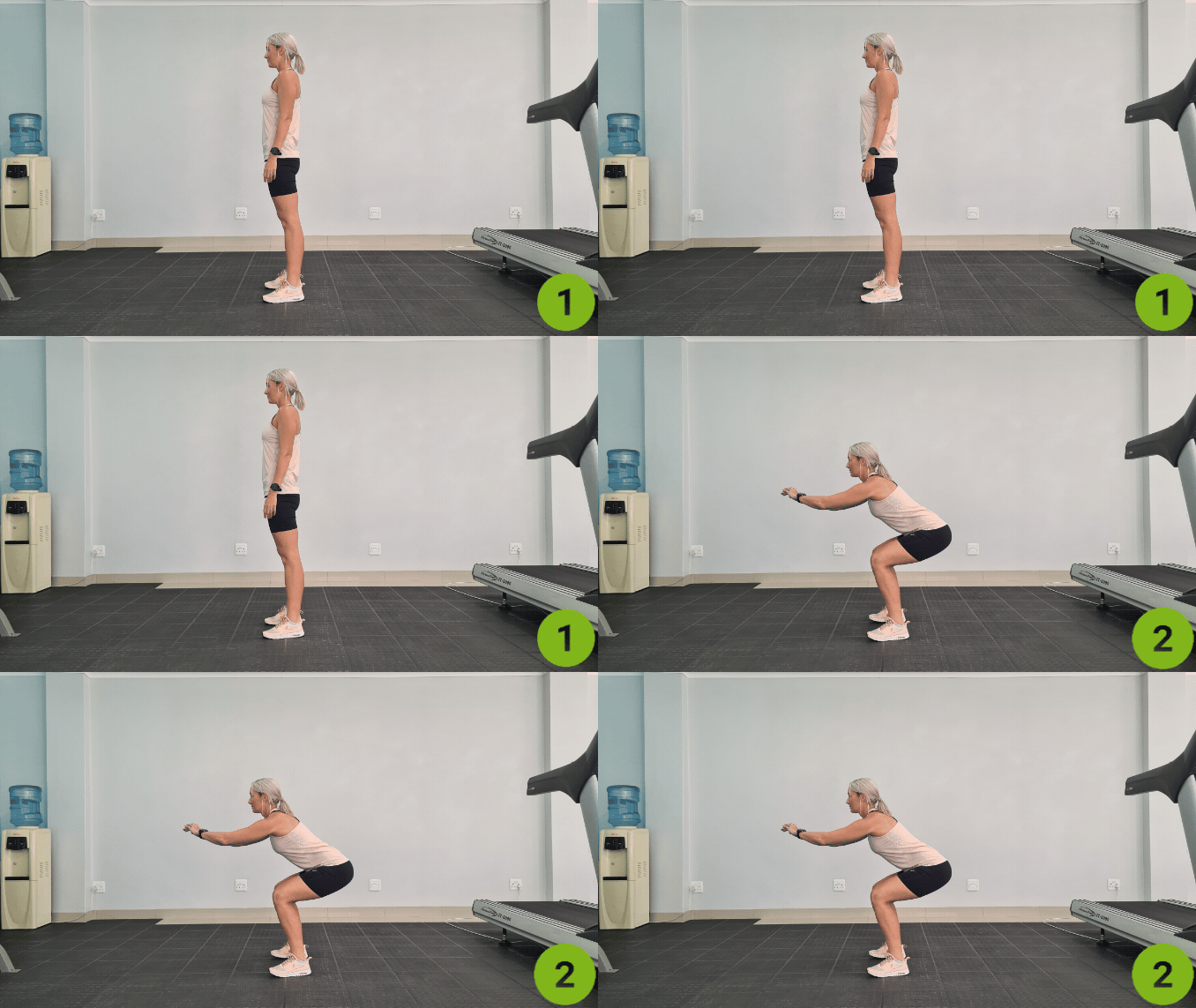
- Move into a small squat and keep your knees aligned over your feet. Gently push your knees outward and hold.
- Hold for 20 to 30 seconds.
- This helps train the hips to better support knee tracking.
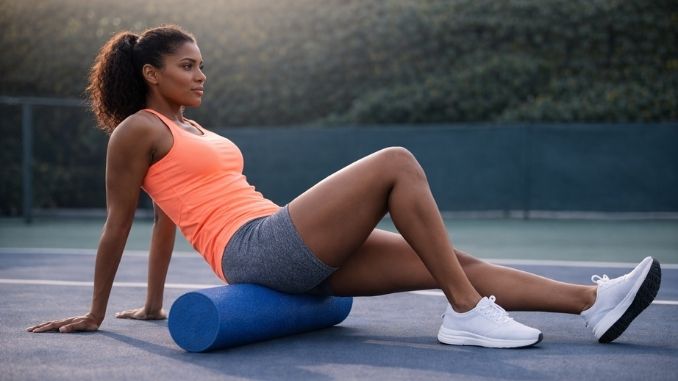
Foam Rolling Areas That May Help Support Better Knee Movement
Foam rolling will not fix everything, but it can help reduce stiffness in areas that affect knee mechanics.
- Quads – Tight quads can add tension around the knee and make bending feel uncomfortable.
- Calves – Stiff calves can limit ankle dorsiflexion and increase knee compensation.
- Outer Hip and Upper IT Band Area – Rolling around the upper outer thigh and hip may help reduce muscle tightness that influences leg movement.
Spend about 30 to 60 seconds on each area and keep the pressure manageable.
What Many Players Get Wrong About Knee Pain
A lot of players only treat the area that hurts.
They ice the knee, rest for a few days, and return to play without changing how they move.
That often leads to the same cycle:`
- play
- flare-up
- rest
- repeat
If your hips and ankles are contributing to the problem, your knee will keep paying the price until those areas improve.
The Hip and Ankle Mobility Link Matters More Than Most People Think
Your knee sits between two joints that strongly influence how it moves.
If the ankle below is stiff and the hip above is tight, the knee often becomes the place where stress shows up.
That is why a smarter approach to pickleball knee pain relief often starts with improving mobility and control in the surrounding joints, not just chasing symptoms at the knee.
If you are dealing with knee pain after pickleball, there is a smarter place to start.
Our free guide shows you how to improve ankle and hip mobility, support better knee tracking, and take pressure off your knees so you can keep playing with more confidence. Claim your free guide today.
FAQs
1. Why do I get knee pain after playing pickleball?
Knee pain after pickleball can come from repeated lunging, pivoting, and quick stops. In many cases, limited ankle mobility and tight hips increase the load placed on the knee.
2. Can tight hips cause knee pain in pickleball?
Yes. Tight hips can affect leg alignment and knee tracking, which may increase stress on the knee during movement.
3. Does ankle mobility affect knee pain?
Yes. Poor ankle dorsiflexion can change how you squat, lunge, and decelerate, which can increase pressure on the knee.
4. What helps reduce pickleball knee pain?
Improving ankle mobility, loosening the hips, activating the glutes, and addressing movement patterns can help reduce stress on the knee.